
Blog
Our Latest Insights
Explore our latest blog post where we share insights on our design process, from initial ideas to completed projects.
Cost-Per-Lead: The One Number Most SMEs Aren't Tracking
Marketing Metrics
As businesses keep investing in digital marketing through 2026, it is easy to focus on the numbers that feel most visible: website traffic, social likes, post impressions, email open rates. Useful as indicators, but they don’t tell you whether your marketing is actually generating new business. The one number most SMEs aren’t tracking is Cost-Per-Lead.
Cost-Per-Lead (CPL) is one of the most important figures many small and medium-sized businesses aren’t tracking. Understanding this single metric can help you make better marketing decisions, spend your budget more effectively, and improve your return on investment.
What is Cost-Per-Lead?
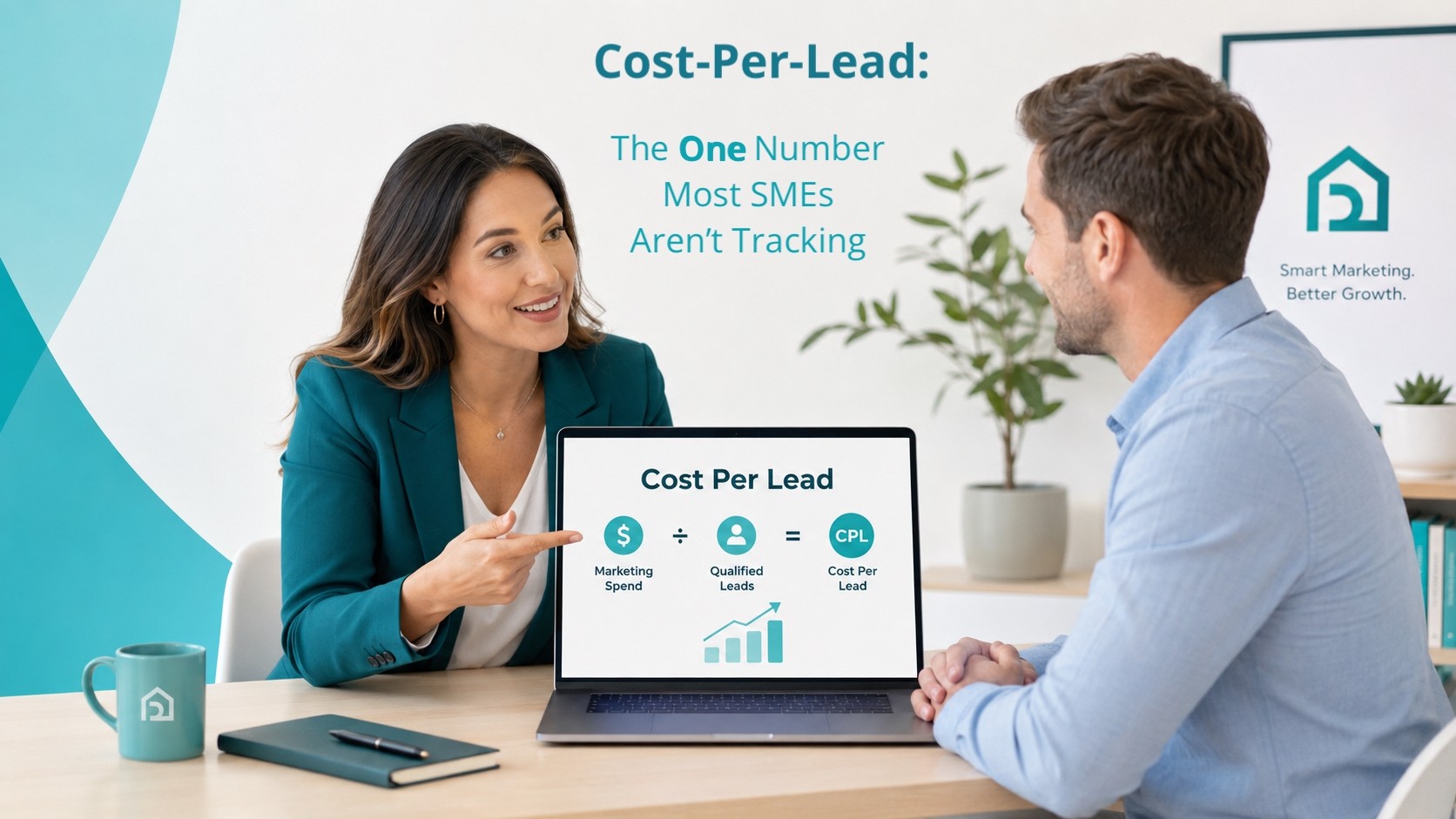
Cost-Per-Lead measures how much you spend, on average, to generate one genuine enquiry. The calculation is simple:
Total Marketing Spend ÷ Number of Qualified Leads = Cost-Per-Lead
For example, if your business spends £2,000 on marketing during a month and generates 40 genuine enquiries, your Cost-Per-Lead is £50. Unlike website visits, impressions or social media engagement, Cost-Per-Lead measures something that directly affects business growth: how efficiently your marketing is generating new opportunities.
Why Cost-Per-Lead matters more than ever
Marketing budgets are valuable. Every pound you invest should contribute towards generating enquiries, customers and long-term business growth. If you don’t know your Cost-Per-Lead, it becomes much harder to understand whether your marketing investment is working. Tracking this figure allows you to:
- Understand which marketing channels deliver the best value.
- Identify campaigns that are costing too much.
- Allocate budgets more effectively.
- Improve overall marketing performance.
- Make decisions based on evidence rather than assumptions.
Instead of asking “How many people saw our advert?”, a better question is “How much did it cost to generate each genuine enquiry?”
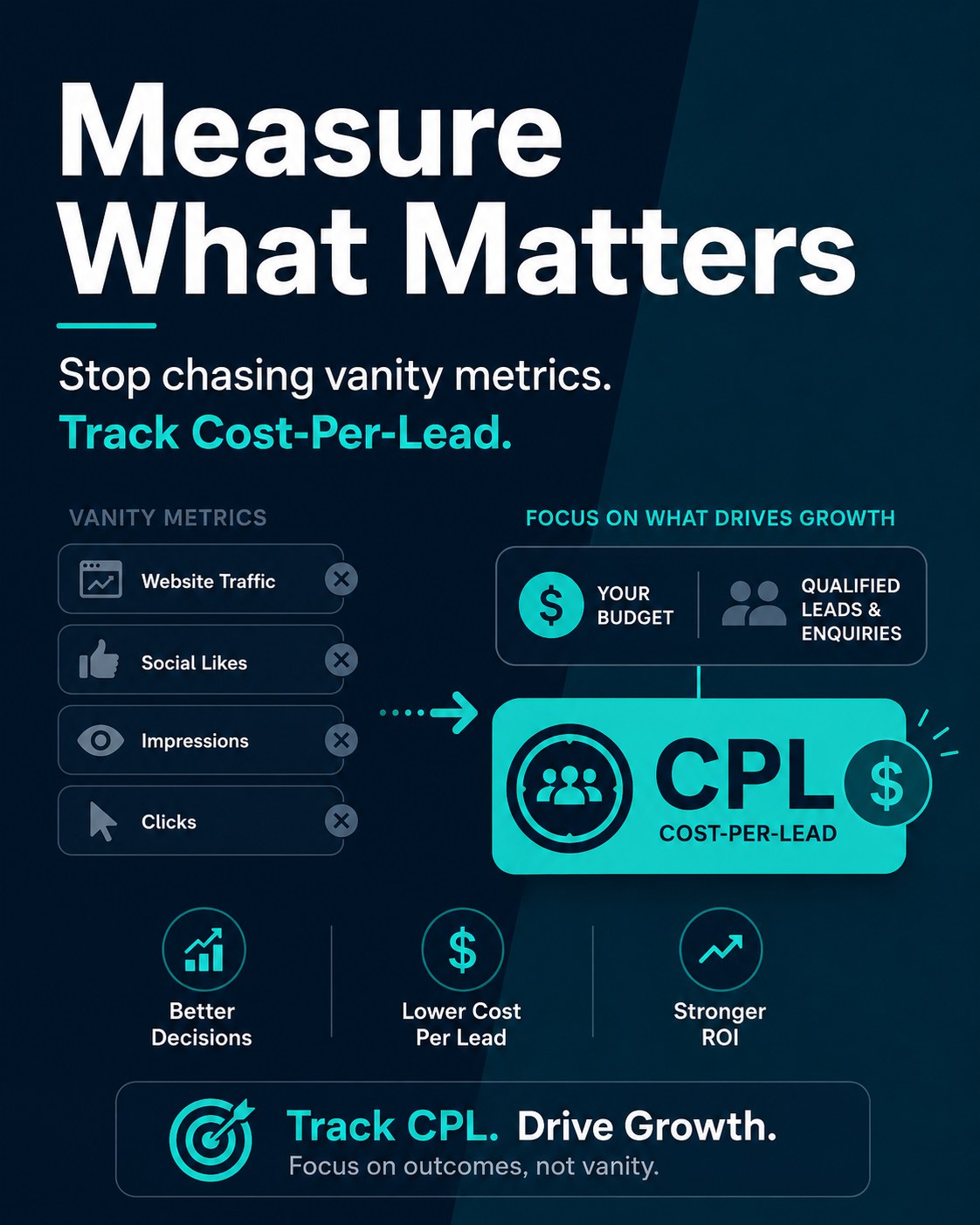
Beyond vanity metrics
Traffic, impressions and likes show activity, not results. Cost-Per-Lead ties your spending directly to genuine enquiries, so you can see whether your marketing is truly winning new business.
Not every lead costs the same
Different marketing channels often produce very different Cost-Per-Lead figures. For example:
- Google Ads may generate enquiries quickly but at a higher cost.
- SEO often takes longer to build momentum but can reduce Cost-Per-Lead over time.
- Email marketing can produce excellent returns when sent to an engaged audience.
- A well-managed Google Business Profile can generate valuable local enquiries with very little ongoing investment.
Understanding these differences allows you to invest where your marketing delivers the greatest return.
Where many businesses go wrong
Without measuring Cost-Per-Lead, it is easy to keep investing in activities that appear busy but aren’t delivering meaningful results. Many businesses continue spending because website traffic has increased, social engagement looks positive, or more people are clicking adverts. The reality is that these figures only tell part of the story. If enquiries aren’t increasing, it is time to look beyond the vanity metrics.
Why the cheapest lead isn’t always the best lead
The cheapest lead isn’t always the most valuable. A campaign generating low-cost enquiries that never convert into customers may prove more expensive than one producing fewer, higher-quality leads. That is why Cost-Per-Lead should always be considered alongside lead quality, conversion rates and customer value.
The objective isn’t simply to generate more enquiries. It’s to generate the right enquiries.Barbara Payne & Sarah Ford, Digital House
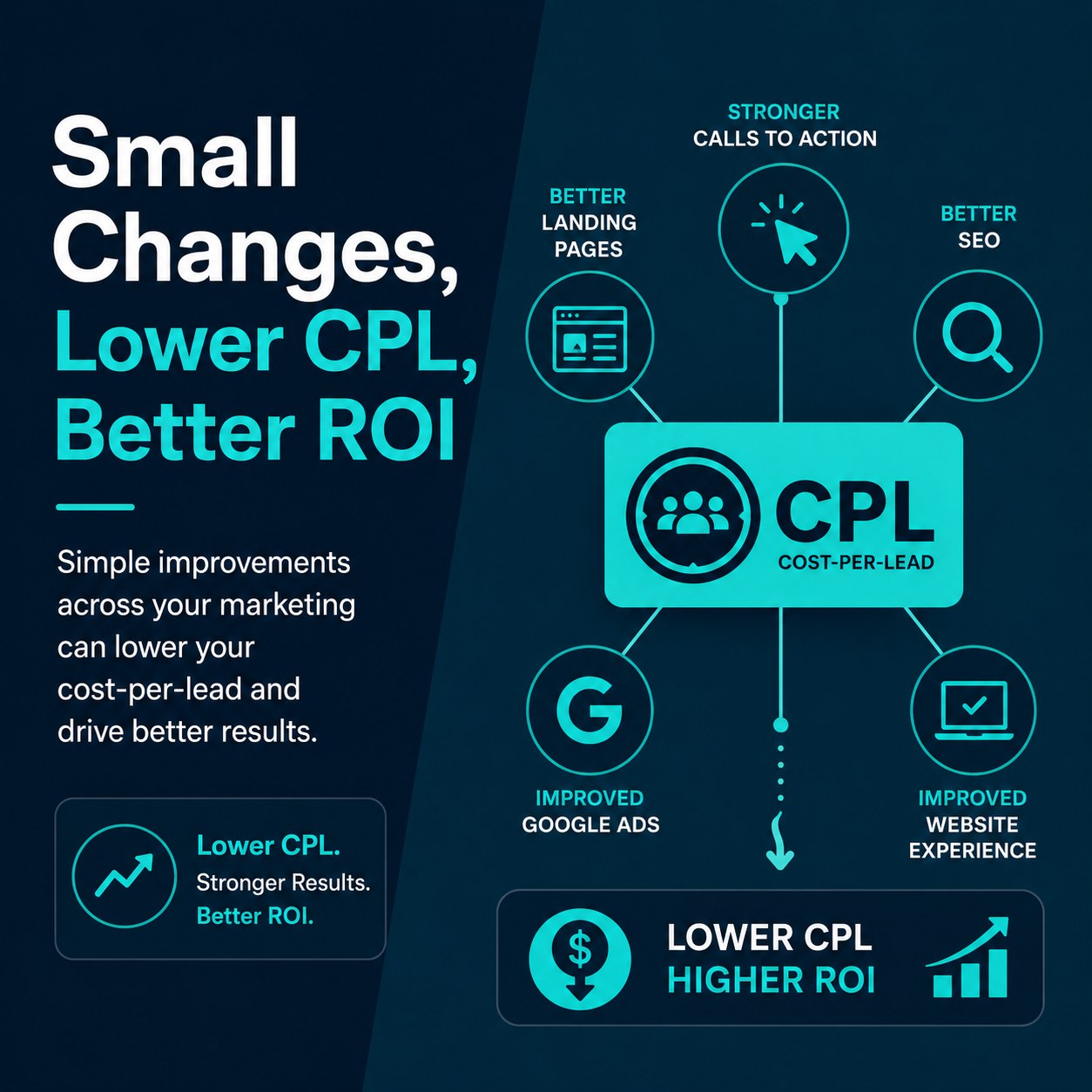
Small changes often deliver the biggest results
Many businesses assume lowering Cost-Per-Lead means increasing their budget. In reality, small improvements often have the greatest impact:
- Improving website user experience.
- Strengthening calls to action.
- Enhancing SEO performance.
- Optimising Google Ads campaigns.
- Updating your Google Business Profile.
- Creating clearer, more helpful content.
- Improving landing page conversion rates.
When these elements work together, businesses often generate more enquiries without increasing their overall marketing spend.
Questions every business should ask
Before investing further in your marketing, ask yourself:
- Do we know our current Cost-Per-Lead?
- Which marketing channel delivers our best-quality enquiries?
- Are we measuring leads or simply website traffic?
- Are we investing in the activities that generate the strongest return?
- Could small improvements reduce our Cost-Per-Lead?
If you’re unsure of the answers, it may be time to take a closer look at how your marketing is performing.
Frequently asked questions
What is a good cost per lead?
There is no single “good” figure; it varies by industry, channel and the value of a customer. What matters more is whether your cost per lead is falling over time and whether those leads convert into paying customers. A higher cost per lead can be perfectly healthy if the leads are high quality and worth more.
How do I calculate my cost per lead?
Divide your total marketing spend over a period by the number of genuine, qualified enquiries it generated. For example, £2,000 of spend that produces 40 enquiries gives a cost per lead of £50. Track it per channel to see which sources deliver the best value.
Why is cost per lead better than tracking website traffic?
Traffic, impressions and likes show activity, not results. Cost per lead ties your spending directly to genuine enquiries, so you can see whether your marketing is actually generating new business rather than just looking busy.
How can I lower my cost per lead without spending more?
Usually through small improvements that compound: clearer calls to action, better website and landing page experience, stronger SEO, well-optimised Google Ads and an up-to-date Google Business Profile. When these work together, you often generate more enquiries from the same budget.
Not sure what your Cost-Per-Lead is?
Many businesses simply don’t know. If you’re investing in marketing but aren’t measuring what it costs to generate a genuine enquiry, it may be time to take a closer look. Understanding your Cost-Per-Lead helps you make better decisions, reduce wasted spend and focus your investment where it will have the greatest impact.
As your Outsourced Marketing Director, we review your current marketing, identify opportunities and build practical strategies for long-term growth. Book a Discovery Call to get started.
Book a Free Digital Marketing Audit
Our free digital marketing audit reviews how your website, email campaigns, and online visibility work together, and identifies practical steps to improve performance.
Request a Free Digital Strategy Audit

We Take Your Digital Marketing to the Next Level
Find effective digital reach and real conversions for your business, driven by data

100
5 Star Google Reviews
