
Blog
Our Latest Insights
Explore our latest blog post where we share insights on our design process, from initial ideas to completed projects.
Blog
Hits: 37
Why Marketing Campaigns Underperform Even With Good Creative

Marketing Strategy
One of the biggest misconceptions in marketing is that great creative guarantees great results. A beautifully designed advert, a professionally produced video, an eye-catching social media campaign: these things can help your marketing stand out, but they are rarely the reason a campaign succeeds.
We have seen businesses invest heavily in creative campaigns that looked impressive but failed to generate meaningful enquiries. We have also seen much simpler campaigns deliver excellent results because the strategy behind them was right. The difference usually is not the creative. It is everything that happens before the creative is created.
Great creative cannot fix an unclear strategy
Creative exists to communicate a message. It does not create the message. If you are unclear about who you are trying to reach, the problem you are solving, or the action you want someone to take, even the strongest creative will struggle. Before investing in the next campaign, it is worth asking:
- What are we trying to achieve?
- Who are we trying to reach?
- Why should they choose us?
Without clear answers, creative can end up looking good without actually moving people to take action.
The audience matters more than the artwork
One of the first questions we ask when planning marketing activity is: who is this actually for? It sounds simple, but many campaigns start with an audience that is far too broad. When you try to speak to everyone, the message often becomes less relevant to anyone. The most effective campaigns, whether on social media, in Google Ads or by email, are built around a specific audience. They understand their challenges, use language that resonates, and position the business as the solution to a problem that already exists.
Every campaign needs one clear purpose
Build awareness, promote multiple services, increase engagement, drive enquiries and strengthen the brand, all in one campaign, usually produces a message that lacks focus. The strongest campaigns have one clear objective, with every element working towards it.
Success is measured before and after launch
Launching a campaign is not the finish line. It is the point where learning begins. The businesses that get the most from their marketing review performance, analyse results and make improvements based on evidence rather than assumptions. Which messages generated interest? Which audiences responded? Which channels created genuine opportunities? Marketing becomes much more effective when decisions are guided by insight rather than guesswork.
Campaigns rarely underperform because they are not attractive enough. More often, they struggle because the business has not clearly defined what success looks like.Barbara Payne & Sarah Ford, Digital House
The bigger picture
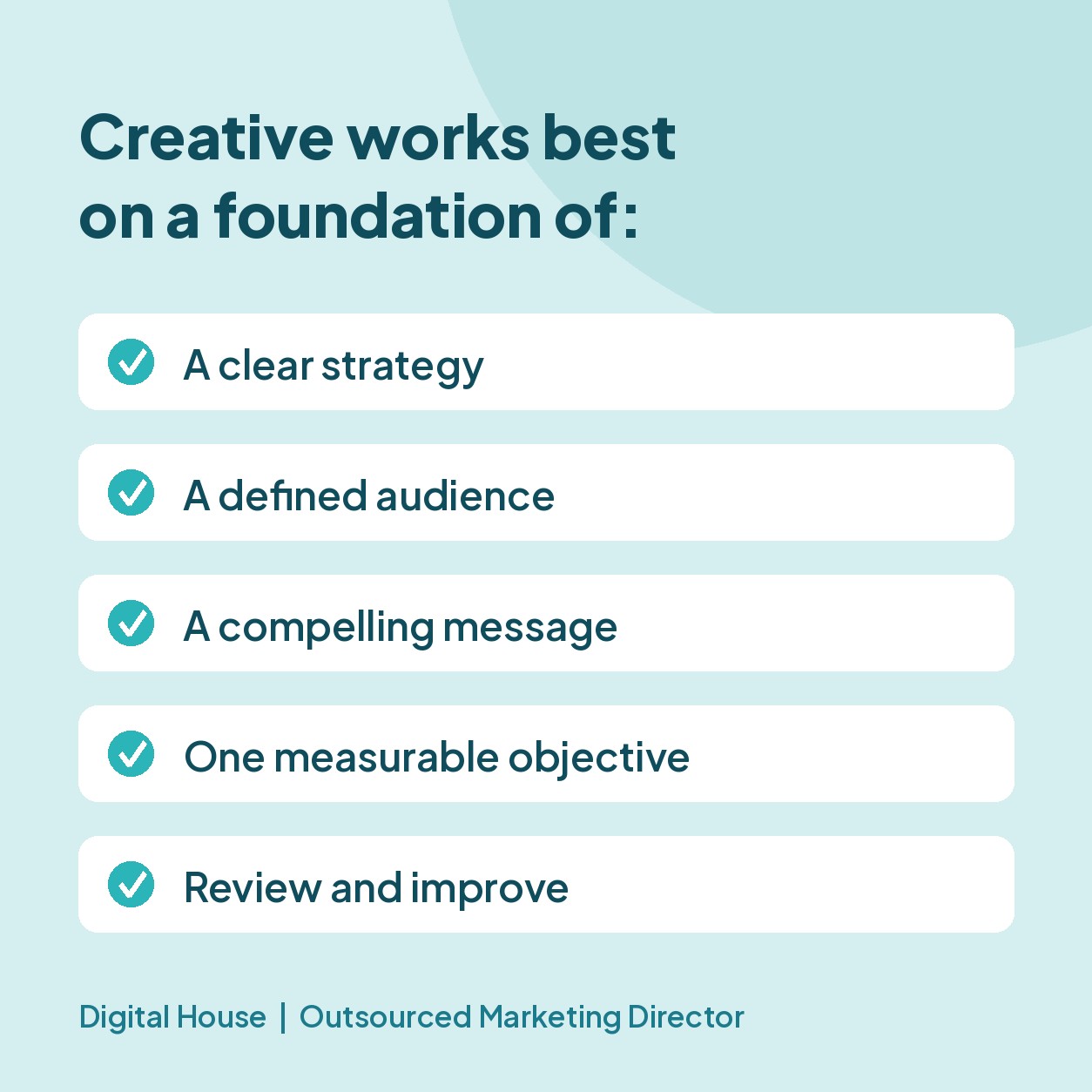
Creative matters. It captures attention, represents your brand and helps people remember you. But creative works best when it is supported by a strong foundation: a clear strategy, a defined audience, a compelling message and a measurable objective. When those elements are in place, creative has a much better chance of delivering results because it is supporting the strategy rather than trying to replace it. The same is true of your website: the best-looking site in the world underperforms if the message and the audience are unclear.
Final thoughts
Before deciding that your next campaign simply needs better creative, ask a different question: is the strategy behind it strong enough? Get the foundations right first and the creative will have a much stronger opportunity to deliver the results you are looking for.
Frequently asked questions
Why do marketing campaigns fail even with good design?
Usually because the strategy underneath is unclear: the audience is too broad, the campaign is trying to achieve too many things at once, or nobody defined what success looks like before launch. Design communicates the message; it cannot invent one.
How do I know if my problem is creative or strategy?
Ask whether you can state, in one sentence, who the campaign is for and what you want them to do next. If you cannot, it is a strategy problem. If you can and the campaign still underperforms, then look at the creative, the channel and the follow-up.
Should every campaign have just one objective?
Yes, as a rule. One clear call to action per campaign. If you have several objectives, run several smaller campaigns and measure each one separately.
What does an Outsourced Marketing Director do about this?
They put the foundations in place before any money is spent on creative: objectives, audience, message and measurement, then manage the agencies and freelancers who produce the work. Read more about marketing consultations and the Outsourced Marketing Director service.
Need stronger marketing direction?
If your campaigns are not delivering the results you expected, the answer may not be a bigger creative budget. It may be having the right strategic direction behind your marketing. For businesses that need experienced marketing leadership without the cost of a full-time hire, an Outsourced Marketing Director can provide the clarity, strategy and support needed to create more effective campaigns.
Book a Discovery Call to explore how it could help your business create clearer strategies, stronger campaigns and better results.
Book a Free Digital Marketing Audit
Our free digital marketing audit reviews how your website, email campaigns, and online visibility work together, and identifies practical steps to improve performance.
Request a Free Digital Strategy Audit
Similar Articles

We Take Your Digital Marketing to the Next Level
Find effective digital reach and real conversions for your business, driven by data

100
5 Star Google Reviews
